
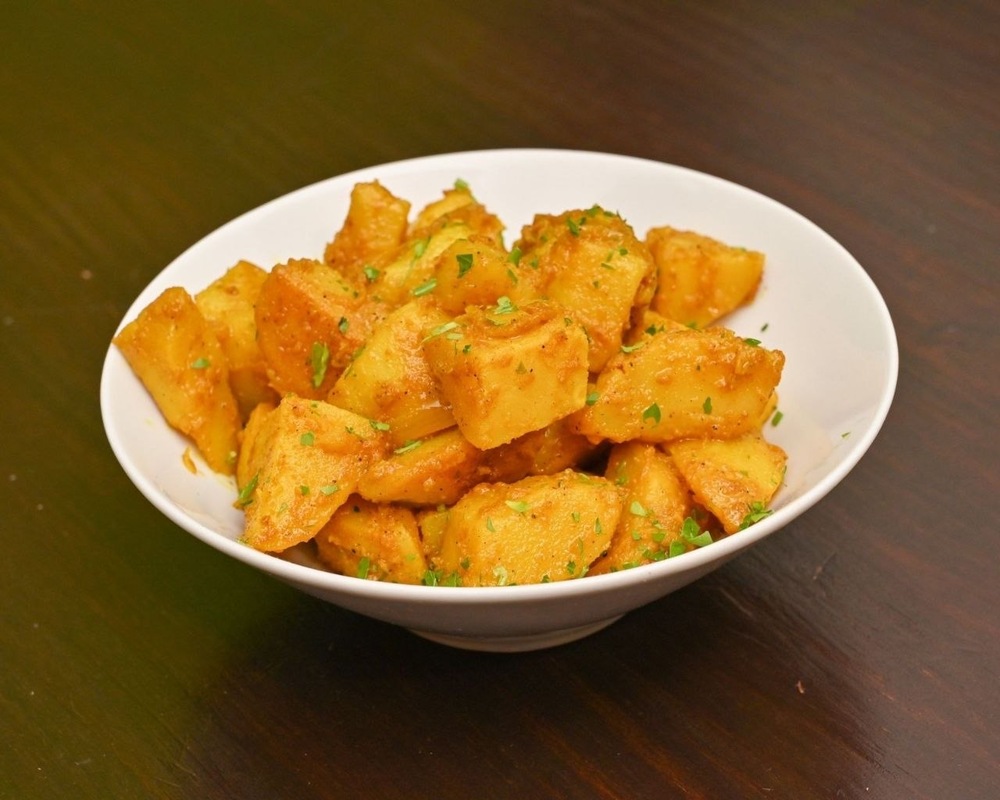
Do Piazeh Aloo: The Taste of a Shirazi Picnic
August 28, 2026
Many Iranian dishes are deeply connected to nature. Some were made to be enjoyed during picnics and family outings. They are usually simple, made with accessible ingredients, but they also carry countless memories for generations of Iranians.
One of the most famous examples is Do Piazeh Aloo, an inseparable part of picnics in Shiraz.
In Shiraz, on any day of the week, if you leave the house and find a tree, some grass, and a little shade, you will probably see a family sitting on a picnic blanket, eating, talking, and laughing. They may look as though they have been given the whole world.
But really, all they have been given is a tree, some shade, a breeze, and a simple food or snack!
And sometimes, that is worth a whole world.
If you look a little closer, you will probably find Do Piazeh Aloo in their pot or bowl: a simple dish made with potatoes and onions.
What Is Do Piazeh Aloo?
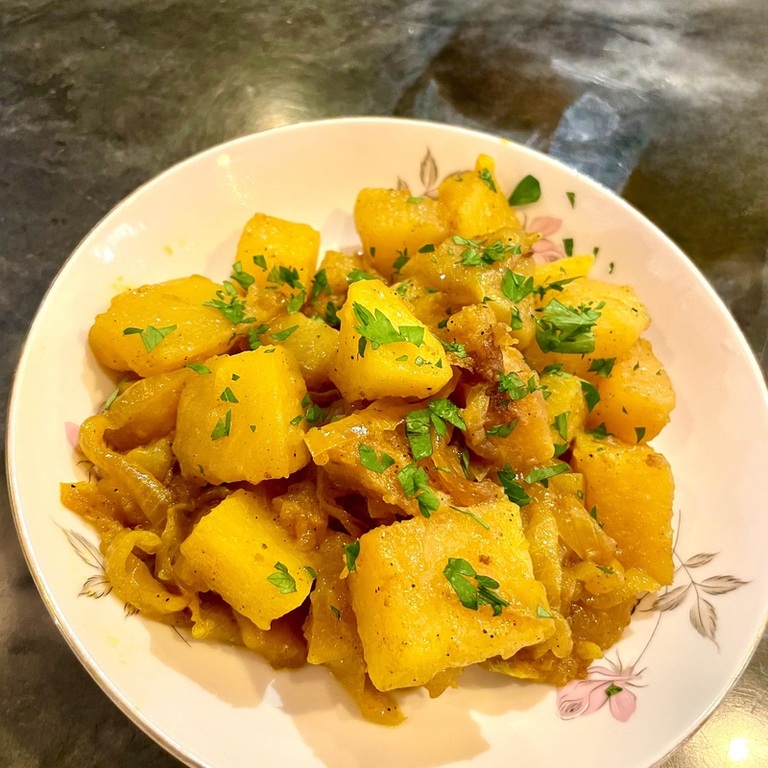
Do Piazeh Aloo is humble enough that even its name seems to tell you exactly what you will find in it: onions and aloo.
In its simplest form, Do Piazeh Aloo is made with just potatoes, onions, turmeric, and salt. But like many Iranian home-cooked dishes, it has taken different forms in different kitchens. Some recipes include tomatoes, bell peppers, or aromatic herbs.
The texture can vary too. Some people make it with diced potatoes, while others prefer to cook the potatoes until they become softer, almost like a rough mash.
This flexibility and generosity are part of what makes Do Piazeh Aloo so appealing. With only a handful of ingredients, it develops a surprisingly deep and layered flavour. The natural sweetness of the onions, the softness of the potatoes, and the aroma of the spices come together to create something far more delicious than its simple recipe might suggest.
If we had to describe what Do Piazeh Aloo means to Iranians, perhaps we could call it a dish of peaceful days.
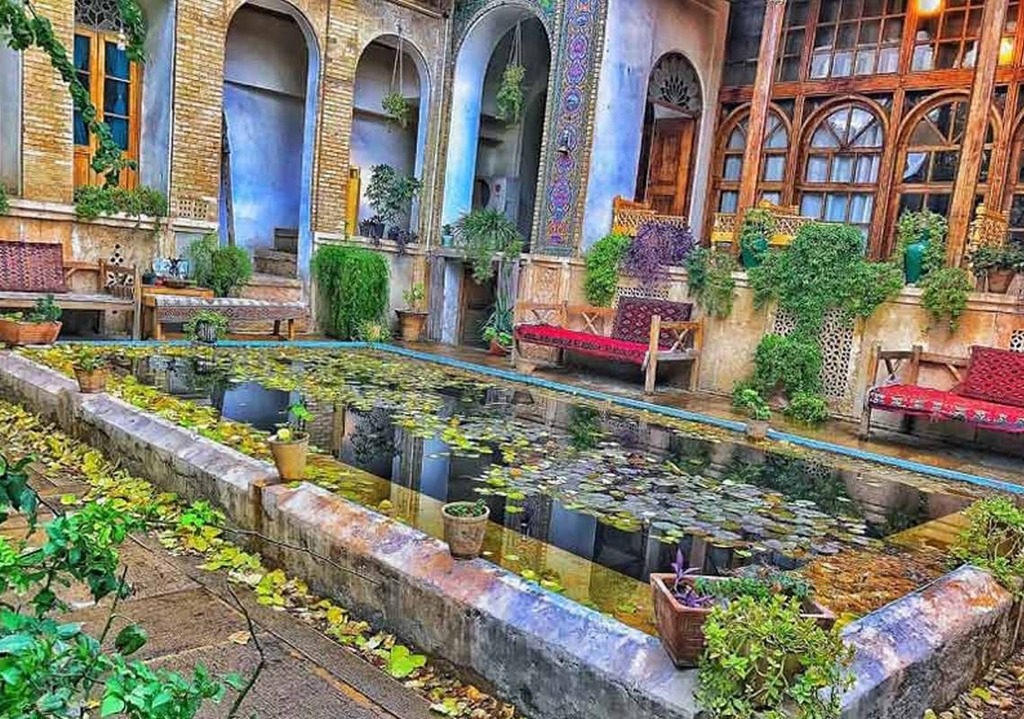
It is not meant to surprise you. It is meant to make you feel good.
Its flavour brings back memories of trees and their shade, family outings, and days when life seemed to move at a slower pace.
And yet, because it is quick to prepare, Do Piazeh Aloo can also travel into other cultures and create new memories. It is simple, quick, comforting, and perfectly suited to the faster rhythm of modern life.
Perhaps that is why Do Piazeh Aloo is one of the most generous dishes we have brought with us from Iran.
Do Piazeh Aloo in Iranian Food Culture
If we think of dishes rich with barberries and saffron as foods for Iranian celebrations and gatherings, Do Piazeh Aloo belongs to another part of Iranian food culture: It is an everyday dish.
It is not usually prepared for formal gatherings or special occasions. It is made for the family.
And while the colourful and elaborate dishes of Iranian cuisine can represent grand celebrations and large gatherings, Do Piazeh Aloo represents another important quality of Iranian cooking: the ability to turn the simplest ingredients into a complete, aromatic, and satisfying meal.
Its generosity is not only in the way it is cooked, but also in how accessible it is.
The ingredients of this Shirazi dish are simple and inexpensive, and can be found in most kitchens. For generations, this has made Do Piazeh Aloo a dish that almost every family could prepare, regardless of their economic circumstances.
Why Do Some Iranians Call Potatoes “Aloo”?
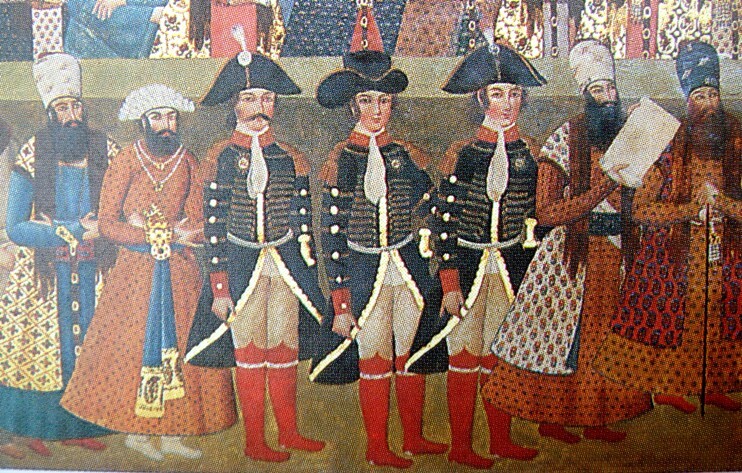
There is a small story behind the name, and it takes us back to the history of the potato in Iran.
A historian from the Qajar period, in the 19th century, wrote that Sir John Malcolm, the British diplomat, introduced the potato to Iran. The potato came to Iran from India, where it had already become part of local cooking.
For a time, Iranians in the south, who were among the first to encounter the potato, called it “Alu-ye Malcolm”, meaning “Malcolm’s plum.” Interestingly, this old expression has not completely disappeared. Some older Iranians still use “Alu-ye Malcolm” when referring to potatoes.
This makes the story of Do Piazeh Aloo even more interesting, because there is also a very similar dish in Indian cuisine called Aloo Do Pyaza.
The resemblance between the two dishes goes beyond their names. Both are built around potatoes and onions, and both can include tomatoes and spices such as turmeric. The main difference is in the way they are seasoned and cooked.
The Indian version is generally more heavily spiced and can include ingredients such as cumin, coriander, ginger, garlic and chilli. The Shirazi version is much simpler and gentler, traditionally allowing the potatoes, onions and turmeric to do most of the work. It is not a spicy dish in the sense of chilli heat.
So perhaps the most interesting thing about these two dishes is not how different they are, but how closely they resemble each other while belonging to two different food traditions.
Both carry the same humble idea: potatoes, onions, a few spices, and the ability to turn simple ingredients into something deeply comforting.
Do Piazeh Aloo at Noush: Gato Potatos
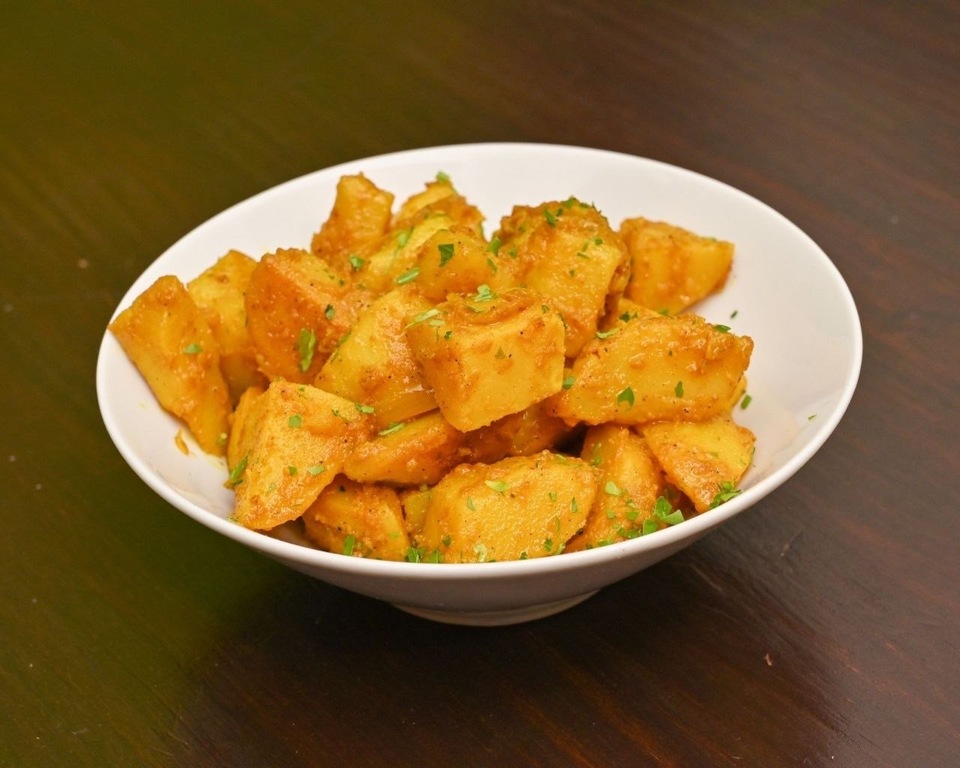
At Noush, we prepare Do Piazeh Aloo with its roots firmly in the culinary tradition of Shiraz: a simple, aromatic dish that you can enjoy as a main dish, or alongside your main course.
But at Noush, the dish has another story.
We call it Gato.
The story began when one of our friends insisted, from the very first days of Noush, that if we wanted to keep a connection with Catalan traditions, our menu should include a dish based on potatoes.
While searching through our own memories, one of us, who is from Shiraz, suggested Do Piazeh Aloo.
Gato liked the tested version, and the name stayed with the dish.
And so a simple Shirazi picnic dish found a new home in Barcelona.
It still carries the potatoes, onions, spices, and memories of Shiraz, but now it also carries a little piece of the story we are creating here at Noush.
Because sometimes food travels further than people do.
A dish can leave a tree in Shiraz, cross borders, arrive in Barcelona, and somehow still remind you of home.